top of page
24:40
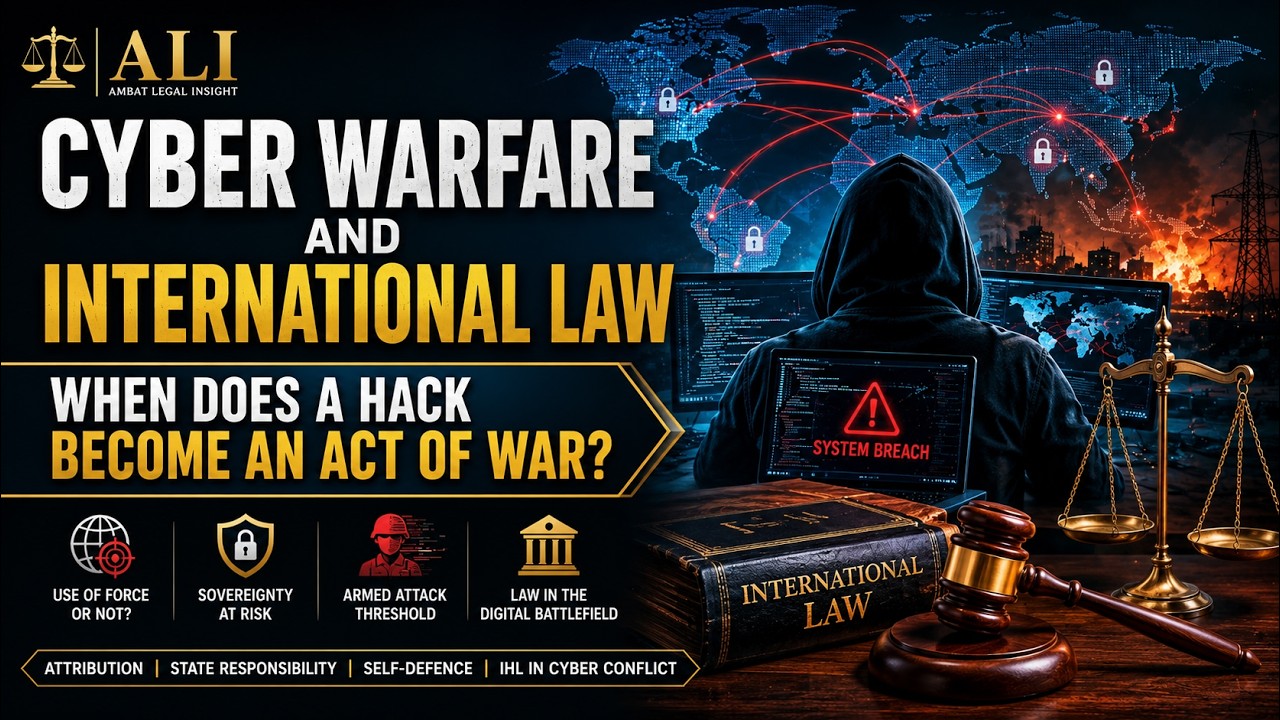
Cyber Warfare and International Law: When Does a Hack Become an Act of War?
When does a cyberattack become an act of war?
A cyber operation can shut down a power grid, cripple communications, disrupt financial systems, steal military secrets or even cause physical destruction—without a single missile being fired. But under international law, does that automatically make it an armed attack?
In this episode of Ambat Legal Insight (ALI), we examine the difficult legal boundary between cybercrime, cyber espionage, cyberattacks, unlawful intervention, use of force and an armed attack under international law.
We explore Article 2(4) and Article 51 of the UN Charter, State responsibility, attribution, sovereignty, non-intervention, self-defence and international humanitarian law, and examine how existing international law is being applied to the rapidly evolving domain of cyber warfare.
We also examine the issue from an Indian strategic and legal perspective, asking what India needs to consider when confronting State-sponsored cyber operations against critical infrastructure, defence systems and national institutions.
The central question is simple:
When does a hack stop being a hack—and become an act of war?
This is Ambat Legal Insight—where law meets emerging technology, national security and the future of State power.
#CyberWarfare, #CyberLaw, #InternationalLaw, #CyberAttack, #CyberSecurity, #CyberConflict, #ActOfWar, #ArmedAttack, #UseOfForce, #UNCharter, #Article51, #StateResponsibility, #CyberEspionage, #CyberOperations, #InternationalHumanitarianLaw, #LawOfWar, #Cyberwar, #CyberSecurityLaw, #India, #IndianCyberSecurity, #AmbatLegalInsight, #ALI, #AmbatMediaGroup

21:42
When AI Writes the Law: Can Indian Courts Trust Artificial Intelligence?
Artificial intelligence is rapidly entering the legal profession—but what happens when AI invents a judgment that never existed?
In July 2026, the Supreme Court of India confronted exactly this problem in Pooja Ramesh Singh v. Jammu and Kashmir Bank Ltd., 2026 INSC 668. The Court found that the NCLT and NCLAT proceedings had relied upon fake, non-existent and AI-hallucinated legal precedents and set aside the decisions. More importantly, the Supreme Court made it clear that AI may assist adjudication, but human beings must retain control over the judicial process.
In this episode of Ambat Legal Insight, we explore what this landmark development means for lawyers, judges, legal research, professional ethics, digital evidence, judicial independence and the future of justice.
Can lawyers trust AI-generated legal research? Should AI use be disclosed in court? Who is responsible when an AI-generated citation enters a judgment? And could artificial intelligence ever become more than an assistant to a judge?
The future courtroom may contain artificial intelligence—but who should remain in charge?
Read the complete analysis- https://www.ambatlegalinsight.com/post/ai-in-indian-courts-can-judges-lawyers-trust-artificial-intelligence
#AIAndLaw, #AIInIndianCourts, #ArtificialIntelligence, #LegalTechnology, #AILawIndia, #IndianJudiciary, #SupremeCourtOfIndia, #LegalEthics, #AIHallucination, #JudicialAI, #FutureOfLaw, #DigitalEvidence, #LawAndTechnology, #AmbatLegalInsight, #ALI,

22:08
Who Owns Your Digital Twin? The Next Legal Battle Over AI Identity | AI Law Explained
Artificial intelligence is no longer just generating content—it is beginning to replicate people. AI can now clone voices, recreate faces, imitate writing styles, and even build convincing digital versions of individuals. These "digital twins" promise enormous opportunities in education, business, healthcare, and entertainment. But they also raise one of the biggest legal questions of the AI era:
Who actually owns your digital twin?
In this episode of Ambat Legal Insight, Advocate Manoj Ambat explores the emerging legal battlefield surrounding AI identity. We examine digital personality rights, consent, privacy, intellectual property, deepfakes, biometric data, inheritance of AI identities, and why governments around the world—including India—must rethink existing legal frameworks before technology outpaces the law.
Whether you're a lawyer, policymaker, technology enthusiast, entrepreneur, student, or simply curious about the future of artificial intelligence, this episode provides a comprehensive legal perspective on one of the most important questions of the coming decade.
Visit:
https://www.ambatlegalinsight.com
#AILaw #ArtificialIntelligence #DigitalTwin #CyberLaw #Privacy #Deepfake #LegalTech #AILegislation #DigitalIdentity #AmbatLegalInsight
AI law, artificial intelligence law, digital twin, AI identity, digital identity, cyber law, legal podcast, privacy law, biometric privacy, AI regulation, AI governance, deepfake law, personality rights, right of publicity, intellectual property, AI ethics, generative AI, consent, digital rights, technology law, advocate Manoj Ambat, Ambat Legal Insight, future of law, AI policy, AI legislation
20:56
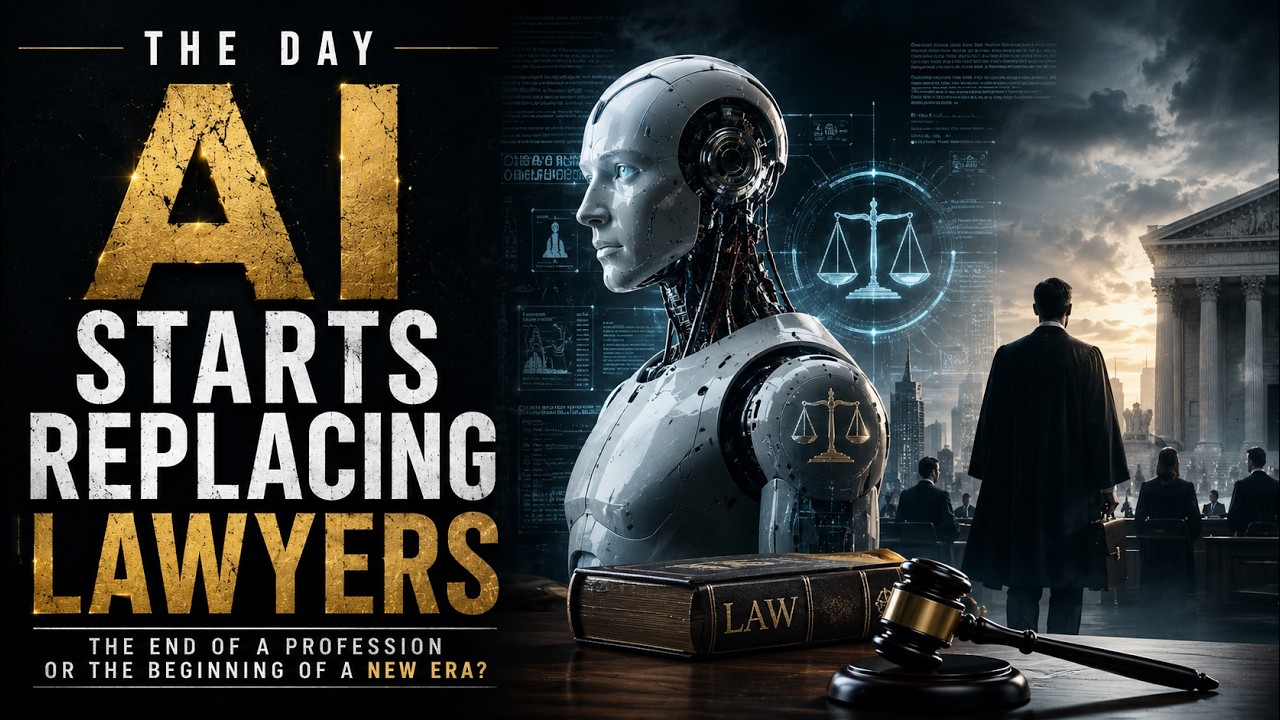
The Day AI Starts Replacing Lawyers
Artificial intelligence is rapidly transforming the legal profession. AI can now draft contracts, conduct legal research, review evidence, predict litigation outcomes, and assist law firms in ways that were unimaginable just a few years ago. But does this mean lawyers are becoming obsolete?
In this episode of the Ambat Legal Insight Podcast, we explore one of the biggest questions facing the future of law: Can AI replace lawyers? We examine how artificial intelligence is reshaping legal practice, the opportunities it creates, the ethical and regulatory challenges it raises, and why human judgment remains central to justice.
From AI-powered legal assistants and automated contract review to courtroom advocacy, legal ethics, and the future of law firms, this episode provides an in-depth legal analysis of how artificial intelligence is changing the legal profession around the world and what it means for lawyers, law students, businesses, policymakers, and ordinary citizens.
Whether you're a legal professional, technology enthusiast, student, or simply curious about the future of justice, this episode offers a balanced and practical look at one of the most important technological transformations of our time.
Read the complete analysis- https://www.ambatlegalinsight.com/post/can-ai-replace-lawyers
AI, ArtificialIntelligence, Lawyers, LegalProfession, LegalTech, AIInLaw, FutureOfLaw, LawFirms, LegalInnovation, ChatGPT, GenerativeAI, LegalResearch, LawStudents, LegalEthics, TechnologyLaw, DigitalJustice, AIGovernance, IndianLaw, Justice, AmbatLegalInsight
bottom of page