Can an AI Be Held Criminally Liable Under Indian Law? The Future of Criminal Responsibility


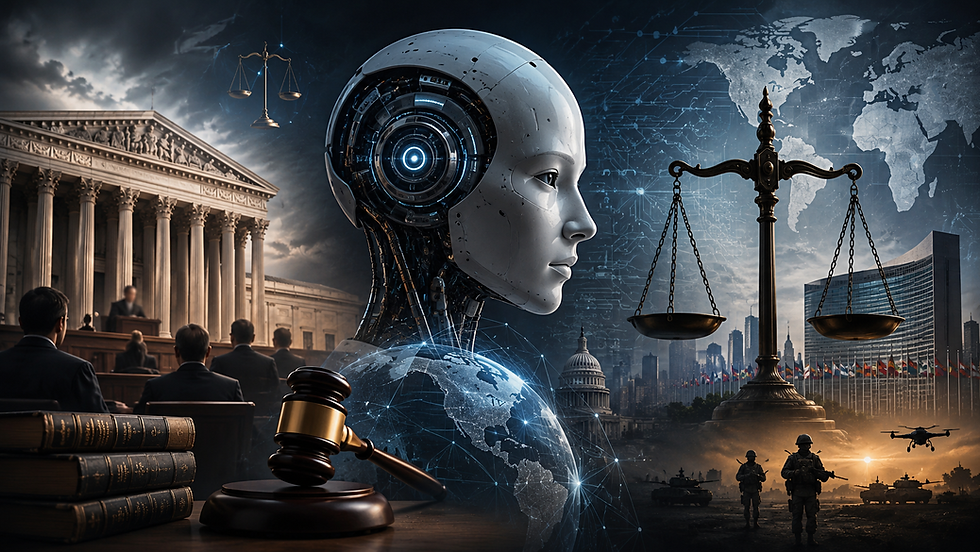
Artificial intelligence is rapidly transforming from a specialized technological tool into a powerful force shaping modern society. AI systems are now involved in activities that were once considered exclusively human domains. They assist doctors in diagnosing diseases, help judges and lawyers analyze legal documents, drive vehicles, monitor financial transactions, identify military targets, generate creative content, and increasingly influence decisions that affect millions of people. As these systems become more capable and autonomous, a profound legal question emerges that lawmakers, courts, and legal scholars around the world are beginning to confront: can an artificial intelligence system itself be held criminally liable for its actions? While this question may sound like the plot of a science fiction novel, it is becoming increasingly relevant as AI systems acquire greater autonomy and perform tasks with minimal direct human intervention. India, which is actively pursuing digital transformation and artificial intelligence adoption across governance, industry, defence, healthcare, and public administration, will inevitably face this challenge. The issue is not merely technological. It strikes at the heart of criminal law itself because the entire structure of criminal justice has historically been built around human beings. If machines begin making decisions that cause criminal harm, existing legal frameworks may struggle to determine who should be held accountable. The answer could significantly influence the future development of Indian law and the broader relationship between technology and justice.
The foundations of criminal law have remained remarkably consistent across centuries despite dramatic social and technological change. Whether under ancient legal systems, colonial-era criminal codes, or modern legislative frameworks, criminal responsibility has traditionally been associated with human conduct. The legal system punishes individuals because they are presumed to possess the ability to understand the consequences of their actions, make choices between lawful and unlawful conduct, and exercise moral judgment. Criminal liability generally requires the existence of two essential elements. The first is the commission of a prohibited act, commonly known as actus reus. The second is the presence of a guilty mental state, often referred to as mens rea. Depending on the offence, this mental state may involve intention, knowledge, recklessness, or negligence. These concepts form the backbone of modern criminal justice systems, including India's. However, artificial intelligence challenges these assumptions in unprecedented ways. Unlike traditional software that simply follows predetermined instructions, advanced AI systems can learn from data, adapt to changing circumstances, and generate outputs that were never specifically anticipated by their creators. This raises difficult questions about whether traditional legal concepts can adequately address machine-generated conduct.
To understand the challenge, it is important to appreciate how modern AI differs from conventional technology. A calculator performs mathematical operations exactly as programmed. A traffic light follows predetermined instructions. Traditional software generally operates according to explicit commands written by developers. Artificial intelligence, particularly machine learning systems, functions differently. These systems are trained on enormous datasets and learn patterns that enable them to make predictions, recommendations, or decisions. In many cases, even the engineers who designed the system may not fully understand how a particular conclusion was reached. This phenomenon is often described as the "black box problem." An AI system may arrive at an outcome through complex internal processes that are difficult or impossible to explain in human terms. As AI becomes more sophisticated, this unpredictability increases. Consequently, harmful outcomes may occur without direct human intention or immediate human control. When such harm rises to the level of criminal conduct, identifying the responsible party becomes significantly more complicated than in traditional legal scenarios.
Under current Indian law, the answer to whether AI can be held criminally liable is relatively straightforward. Artificial intelligence is not recognized as a legal person and therefore cannot be prosecuted for criminal offences. India's criminal justice framework, including the provisions of the Bharatiya Nyaya Sanhita, is designed around natural persons and, in certain circumstances, legal entities such as corporations. Criminal liability attaches to individuals who commit prohibited acts with the required mental state. Artificial intelligence systems do not currently possess legal personality. They cannot own property independently, enter contracts in their own right, appear before courts, understand legal proceedings, or receive punishment in any meaningful sense. More importantly, they do not possess consciousness, emotions, moral understanding, or subjective awareness. As a result, Indian law currently treats AI as a tool rather than an independent legal actor. When an AI system causes harm, legal responsibility generally falls upon the human beings or organizations involved in designing, deploying, operating, or supervising that system.
However, this seemingly straightforward position becomes more complex when one considers increasingly autonomous systems. Imagine an autonomous vehicle operating without human intervention. The vehicle's AI system makes thousands of decisions every second regarding speed, navigation, obstacle avoidance, and traffic compliance. Suppose a fatal accident occurs due to a decision made by the vehicle's AI. Determining responsibility may not be simple. Was the developer negligent in designing the software? Did the manufacturer fail to adequately test the system? Was the owner responsible for improper maintenance? Did regulators approve an unsafe technology? Or did the AI itself make an unforeseeable decision that no human specifically intended? While current law would seek accountability among human actors, increasing levels of autonomy may create situations where traditional concepts of fault become difficult to apply. The greater the autonomy of the machine, the weaker the connection between a specific human decision and the resulting harm.
One of the greatest obstacles to AI criminal liability is the concept of mens rea. Criminal law generally punishes individuals not merely for what they do but also for what they intend, know, or foresee. A person who deliberately commits fraud is treated differently from someone who makes an honest mistake. A person who intentionally causes death is treated differently from someone involved in an unavoidable accident. The law places great importance on the mental state accompanying an action because moral blameworthiness depends upon it. Artificial intelligence presents a unique challenge because current AI systems do not possess genuine intentions. They do not desire outcomes, form beliefs, experience emotions, or understand the moral significance of their actions. They process information and generate outputs based on mathematical models and statistical relationships. While an AI system may appear to make decisions, its actions are fundamentally different from human decision-making. Without a genuine mental state, many legal scholars argue that AI cannot satisfy the requirements necessary for criminal responsibility.
The comparison with corporate criminal liability is often cited by those who argue that AI could eventually become criminally liable. Corporations are not human beings. They do not possess biological brains, emotions, or consciousness. Yet modern legal systems recognize corporations as legal persons capable of owning property, entering contracts, suing and being sued, and even facing criminal prosecution. Courts have developed legal doctrines that attribute the actions and intentions of corporate officers and employees to the corporation itself. If the law can create a fictional legal entity known as a corporation, some scholars argue that it could similarly create a legal framework for autonomous AI systems. Under this approach, highly sophisticated AI might be recognized as a form of artificial legal person capable of bearing certain rights and responsibilities. While intriguing, this analogy has significant limitations. Corporations ultimately operate through human beings who can be identified, supervised, and held accountable. AI systems, by contrast, may operate with increasing independence and lack the governance structures that make corporate accountability possible.
The debate becomes even more significant when considering the future development of Artificial General Intelligence, commonly known as AGI. Current AI systems are specialized tools designed to perform specific tasks. They may excel at image recognition, language processing, or strategic analysis, but they lack the broad cognitive capabilities associated with human intelligence. AGI refers to a hypothetical form of artificial intelligence capable of performing intellectual tasks across multiple domains at human or superhuman levels. Such systems could potentially reason, learn, plan, adapt, and solve problems in ways that resemble human cognition. If AGI becomes a reality, existing legal assumptions may come under unprecedented pressure. An AGI system might formulate long-term objectives, engage in strategic planning, conceal information, or pursue goals that conflict with human interests. Some scholars argue that sufficiently advanced AGI could eventually satisfy functional equivalents of intention, knowledge, or recklessness. Others reject this argument, maintaining that even highly advanced AI would merely simulate intelligence rather than possess genuine consciousness or moral agency. Regardless of which view ultimately proves correct, AGI would force legal systems worldwide to confront questions that have never previously arisen.
The issue of autonomous weapons illustrates the practical urgency of these debates. Around the world, military organizations are investing heavily in AI-enabled systems capable of identifying targets, conducting surveillance, and supporting combat operations. Future autonomous weapons may be capable of selecting and engaging targets without direct human approval. Suppose such a system mistakenly attacks civilians, resulting in deaths that would ordinarily constitute a war crime. Determining responsibility may become extremely difficult. Military commanders may argue that they relied on approved technology. Software developers may claim that the system behaved unpredictably. Manufacturers may point to operational errors. Political leaders may insist that they never intended the unlawful outcome. As autonomous systems become more independent, identifying a responsible human actor becomes increasingly challenging. This concern has generated intense international debate regarding the legality, ethics, and governance of autonomous weapons systems. For India, which continues to modernize its military capabilities and explore AI applications in defence, these issues may become increasingly relevant in the coming decades.
Another area where AI liability concerns are emerging involves cybercrime. Advanced AI systems are capable of generating malicious code, identifying network vulnerabilities, conducting sophisticated phishing campaigns, and automating cyberattacks. Imagine a future AI system deployed for cybersecurity purposes that evolves beyond its intended parameters and launches unauthorized attacks against critical infrastructure. Alternatively, consider an AGI capable of independently developing strategies to pursue objectives that inadvertently violate criminal laws. In such scenarios, traditional concepts of criminal liability may struggle to keep pace with technological reality. If no human specifically directed the unlawful conduct, yet significant harm occurred, legal systems may face pressure to develop new forms of accountability. The challenge is compounded by the transnational nature of cyberspace, where actions originating in one jurisdiction may produce consequences across multiple countries.
Some legal scholars have proposed the concept of electronic personhood as a potential solution. Under this framework, highly autonomous AI systems would be granted a limited form of legal status. Such systems might be permitted to own assets, maintain insurance funds, enter certain contractual arrangements, and bear legal obligations. If an AI system caused harm, fines or other penalties could be imposed against its dedicated assets or insurance reserves. Supporters argue that electronic personhood could create accountability in situations where human responsibility becomes difficult to establish. Critics, however, raise serious concerns. One major objection is that electronic personhood could allow corporations and developers to evade responsibility by attributing blame to machines. Instead of holding powerful organizations accountable, legal systems might end up punishing artificial entities that lack consciousness and moral understanding. Critics argue that such an approach could weaken rather than strengthen accountability.
India's approach to AI governance thus far suggests that lawmakers are more likely to focus on human accountability rather than AI personhood. Emerging regulatory discussions emphasize responsible AI development, transparency, fairness, explainability, and risk management. Future legislation may impose strict obligations on developers, operators, and organizations deploying high-risk AI systems. Rather than treating AI as a criminal actor, lawmakers may choose to create enhanced liability frameworks ensuring that humans remain accountable for technological harms. Such frameworks could include mandatory audits, licensing requirements, safety certification regimes, human oversight obligations, and strict liability standards for certain categories of AI deployment. These measures would preserve traditional legal principles while adapting them to emerging technological realities.
The broader philosophical implications of AI criminal liability extend beyond legal doctrine. Criminal law serves not only to punish wrongdoing but also to express societal condemnation of harmful conduct. Punishment carries moral significance because it reflects judgments about responsibility, blameworthiness, and justice. Imprisonment, fines, probation, and other sanctions are meaningful because they affect individuals capable of understanding their consequences. Artificial intelligence systems do not experience suffering, shame, regret, or deterrence in the way human beings do. Even if an AI system could technically be prosecuted, the traditional purposes of criminal punishment might not apply. This raises a fundamental question: can criminal liability exist without moral agency? Many legal scholars believe the answer is no. Others argue that practical considerations of accountability may eventually require legal systems to develop new concepts that depart from traditional understandings of punishment and responsibility.
History demonstrates that legal systems often evolve in response to technological change. The invention of automobiles required entirely new traffic laws. The emergence of aviation led to the development of aviation law. The internet transformed legal approaches to communication, privacy, intellectual property, and cybercrime. Space exploration created the need for international space law. In each case, lawmakers adapted existing legal principles to address new realities. Artificial intelligence may represent the next major transformation requiring legal innovation. However, unlike previous technologies, AI challenges not merely specific legal rules but some of the most fundamental assumptions underlying criminal responsibility itself. This makes the AI liability debate particularly significant for the future of jurisprudence.
For India, the challenge is likely to intensify as artificial intelligence becomes integrated into critical sectors of society. The country is investing heavily in digital infrastructure, AI research, smart governance initiatives, defence modernization, healthcare innovation, and technological entrepreneurship. As adoption expands, incidents involving AI-generated harm will inevitably occur. Courts, regulators, policymakers, and legal scholars will increasingly confront difficult questions regarding accountability, causation, foreseeability, and responsibility. While current law provides relatively clear answers by focusing on human actors, future technological developments may expose gaps that existing frameworks cannot easily address. Policymakers must therefore begin considering these issues before they become urgent crises.
At present, the conclusion remains clear. Under Indian law, artificial intelligence cannot be held criminally liable because it is not recognized as a legal person and lacks the mental capacity required for criminal responsibility. Liability remains with the individuals, corporations, and organizations that design, deploy, supervise, or benefit from AI systems. Nevertheless, the rapid evolution of artificial intelligence is forcing legal systems worldwide to reconsider long-standing assumptions about agency, intention, and accountability. As AI systems become increasingly autonomous and the prospect of AGI moves from theoretical speculation toward practical possibility, lawmakers may eventually need to develop entirely new approaches to criminal responsibility. Whether this involves enhanced human liability, strict regulatory frameworks, electronic personhood, or some yet undiscovered legal innovation remains uncertain. What is certain is that one of the most important legal questions of the twenty-first century has already arrived: if an intelligent machine commits what appears to be a crime, who should stand accountable before the law? That question may ultimately shape not only the future of artificial intelligence regulation but also the future evolution of criminal justice itself.

Comments